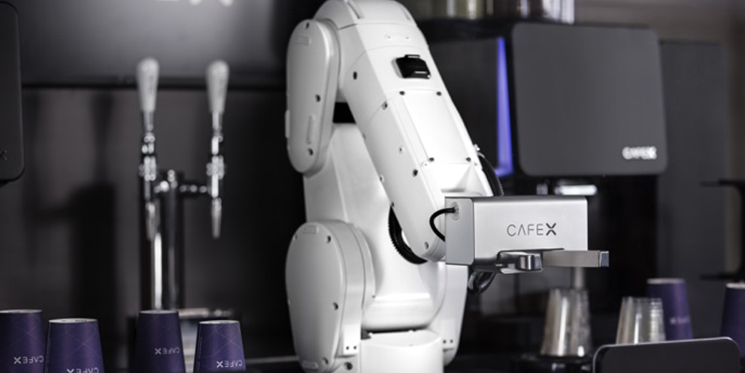
Robotics seems to be transforming the business operations paradigm in many sectors and San Francisco is a great example of this. Café X on Market Street, for example, offers a unique futuristic experience that makes us think about the challenges our retail customers will face in the future.
In this mechanized coffee shop, the barista is a robot. Works with robotic precision to create recipes designed by top professionals and leaves room for human focus in the product selection process.
Respecting hygiene requirements and offering a different experience to the eyes of the consumer, the intelligent robot picks up the glass, grinds the coffee bean and mixes. We are thus surprised by variations of a single drink. No need to wait in line, you can order through the application and lift the drink in seconds. Simplicity, speed, and quality are easily achieved with top technology. Is this the future of stores?
We will be looking forward to seeing the future developments!
Macro trends such as population growth, climate change, urbanization, and trade globalization have driven the modernization of the agricultural sector. Ever seen as an activity based on traditional techniques, agriculture is turning into a high-tech industry.
Smart & Precision Farming, Farming Systems & Machinery, Vertical Farming, Crop Efficiency, Big Data, Drones & Satellites and Internet of Things (IoT) are some of the emerging technologies that support the AgriTech (or AgTech) as well as optimizing results for farmers.
Agroop is one of the innovation reference cases in the Precision Farming area in Portugal. Focused on developing a concept based on observing, measuring and responding to changes in crops, the AgriTech startup has created software for crop monitoring, resource-saving, risk prevention, and production improvement. Agroop has developed also a device that acts as a sensor capable of monitoring solar radiation, temperature, and humidity of crops.
Despite the strong activity of the AgriTech industry, it is believed that artificial intelligence, 3D printing, and sensor technology will still have much to add to the innovation and disruption of the agricultural sector. Smarter and more connected agriculturists increase the quality and quantity of agricultural production, and in that sense, they become the key to address issues relevant to Humanity.
In the Global Strategic Innovation Program, you can learn about emerging leaders and emerging startups in Silicon Valley. Learn about disruptive technology and its impact on business and society development. Explore our innovation programs here.
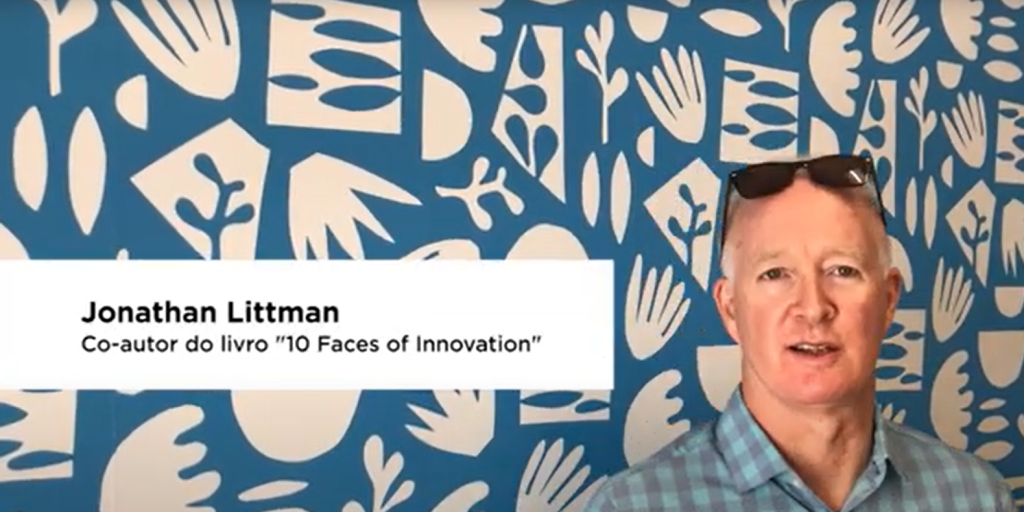
Jonathan Littman is a writer, specialized in Knowledge, Media and Innovation and co-autor of the book “Ten Faces of Innovation”, on design thinking, in partnership with IDEO. He is very familiar with innovation in the Bay Area as well as other ecosystems in the world and he is part of ur GSI Innovation and Immersion Program.
In the video above, Jonathan Littman explains you why you should and the people you will meet, in Silicon Valley.
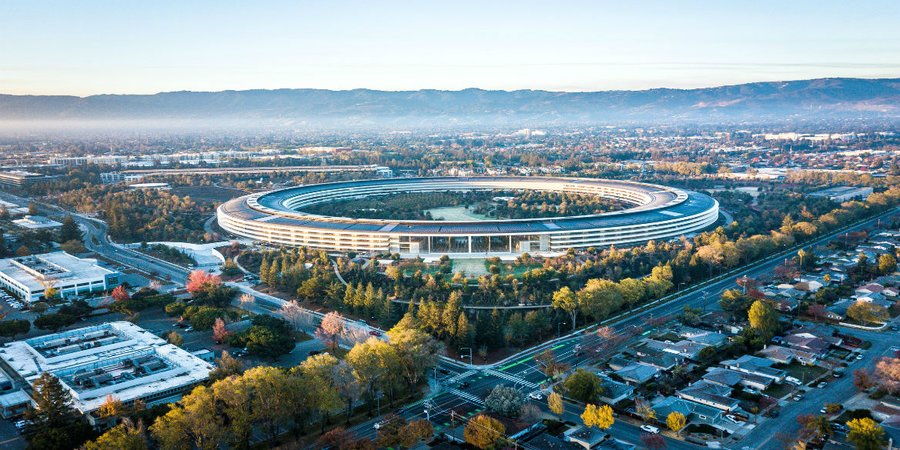
Silicon Valley is known as the world of technology and innovation. We may not remember well but the world existed before the internet. But how about Silicon Valley? Is it an exaggeration to say that from this Valley emerged companies that revolutionized the way we live today?
Today in Silicon Valley, there are highly qualified scientists and engineers, large investors and elite universities. Although hard to imagine, until the 1950s, the Santa Clara area was predominantly an agricultural zone, full of fruit trees. San Jose, where the famous Bay Area is located, was the capital of canned fruit and Stanford University (now one of the top universities in the world and the starting point for what SV would become) was just another higher education school.
The term Silicon Valley appeared in 1971 by Don Hoefler, an American journalist, and stands for determination, intelligence, and passion for technology. And this name could not be more in agreement to what was going to happen when by the hand of two colleagues from Stanford University, HP was born and with it, emerged also what we know today as Silicon Valley. Hewlett-Packard became one of the great pillars of technological progress in the area and, for a long time, was the reference company where all engineers would like to work.
Since the beginning, this “Valley of Dreams” was the birthplace of big companies and HP was not the only name born and raised in the Valley. In 1959, it was invented what would change the life of the entire world population and Silicon Valley’s electronics industry: the first integrated circuit capable of being produced commercially, a complete electronic circuit inside a silicon chip. With this invention, the revolution of the personal computer began, and Intel is born.
In the mid-1990s, with Apple, Microsoft, and IBM already in the race, the technology industry grew at a very fast pace and Silicon Valley was the stage for all the news and events.
In the middle of 1994, with the launch of the Internet to the general public, a several of new companies appeared – predominant in the current market – such as Cisco, Yahoo!, Amazon and eBay. And, again, through two colleagues from Stanford University, comes what came to redefine the way we use the Internet today – Google.
As the Internet grew with the help of large investments, Silicon Valley was the place where everyone with new ideas wanted to be. At this point, the Bay Area was where all the action took place.
The beginning of the 21st century confirmed the true power of the Internet, and over the past 19 years, industries have been reinvented and new ones emerged. Industries that would change our lives forever.
With the rise of social networks, Apple’s revolutionary inventions and the positioning of Android, we have seen a fierce evolution of smartphones, tablets and personal computers.
So far, the 21st century has confirmed what a place with huge potential, innovative and technological spirit and highly qualified as Silicon Valley can achieve.
There is no doubt that the Valley led the technological progress of the 20th century and shows ambition to continue to do so. The report of the most recent study by CB Insights, which focuses on the locations of the world where the largest technological activities take place, highlights the dominance of Silicon Valley which, since 2012, has seen more than 12,000 businesses made by 7,000 companies. This hub has done more business in the technology field than all the metropolises outside the United States combined.
It’s impossible to predict what the future holds, we can only look at what we have and know so far and try to understand in what direction things will evolve. Still, we know that inevitably new industries will emerge. At this point, it is possible to understand that the future involves Artificial Intelligence, the Internet of Things, autonomous cars and quantum computers; and these are just some of the topics that show the ability to face the future and win. On the other hand, we also have technologies such as Blockchain and Cryptocurrencies, that should continue to evolve and that also show great potential.
Despite the corporate level, where Silicon Valley’s impact is most easily felt is at the personal and individual level, as said by the testimonies of participants in previous editions of the Global Strategic InnovationExecutive Immersion Program, managed by LBC.
For all this, we can consider Silicon Valley as a “state of mind” of permanent challenge where aspiration and dream are the engines for generating ideas, where the acceptance of risk and trial and error are a way to grow and develop companies and, above all, where the construction of networks of trust and sharing of knowledge and experiences are the true reward of this technological journey.
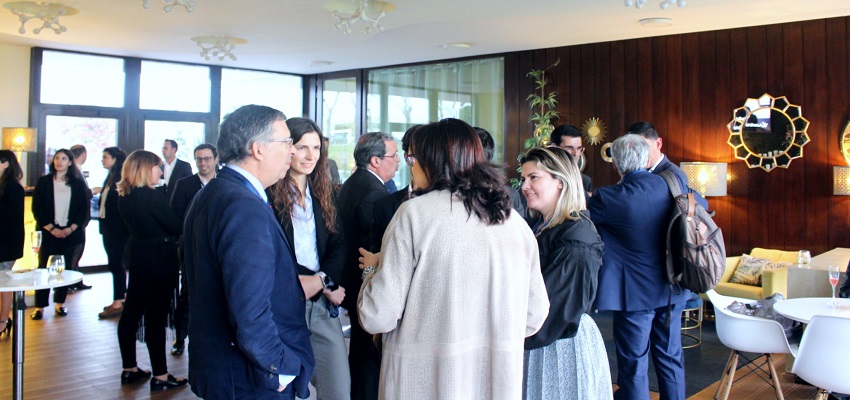
The Lisbon Golf Academy hosted the latest GSI – Global Strategic Innovation event for its Alumni community that focused on the presentation of the 2019 program. On the verge to its ninth edition, and with more than 400 entrepreneurial participants, it was discussed how GSI and its programs promoted innovation in organizations.
Carlos Oliveira, Managing Partner of LBC, presented the GSI 2019 program, which will focus on themes such as Smart Cities, Mobility, Agrotech and Fintech.
Responsible for the design of the GSI program since its foundation, Carlos Oliveira also discussed how corporate venture has become a reality in Portugal and how startups acceleration is a necessity for companies nowadays.
The event was attended by Miguel Fontes, Director of Startup Lisboa, who presented the developments of Hub Criativo do Beato, an initiative that has the support of LBC as an Advisory Partner. Miguel Fontes also discussed future growth plans and how the GSI Alumni could benefit from Hub Criativo do Beato.
Lastly, the event included the Assistant Secretary of State and Mobility, Prof. José Mendes, who participated in the GSI in 2012. He spoke about his experience as a GSI participant and how the program influenced his work in creating an innovative ecosystem as vice dean of the University of Minho. Prof. José Mendes also spoke about the advances in electric mobility, especially in terms of regulation, and also about the importance of energy solutions for long-distance and heavy mobility.
The GSI Alumni Network marks the beginning of an Alumni community that has grown organically and will now benefit from regular innovation events.
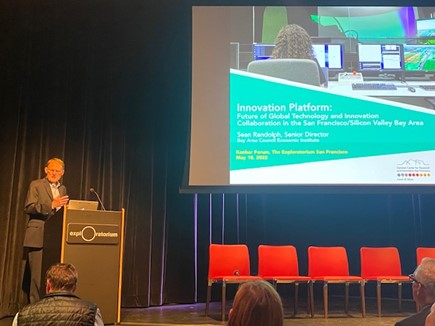
Sean Randolph, Senior Director, Bay Area Council Economic Institute, author of the Innovation Platform Report: The Future of Global Technology and Innovation Collaboration in the San Francisco/Silicon Valley Bay Area
The event included 3 panel roundtables with a variety of leaders from Consulates, incubators and accelerators as well as venture capital firms and research centers. The report researched whether the Covid pandemic had negatively impacted the presence of foreign representation in the San Francisco Bay Area.
While the pandemic saw most countries and foreign entities temporarily closing down their physical offices in 2020 and into 2021, a lot of them adapted and went virtual, or ended up offering a hybrid model of operation. The key takeaways of the presentation of the report for LBC were the following:
The majority of foreign centers have reopened in 2022 with a number increasing their activity in the San Francisco Bay Area.
The core mission of the foreign presence remains unchanged: even though other locations across the US and the world have grown in significance, they believe the San Francisco Bay Area will remain the premier global center for innovation and the place where the script for Digitalization is being written.
Many Consulates have now appointed “Tech Ambassadors” to their outposts in the San Francisco Bay Area. This move reflects the belief that digitalization and tech trends are still largely initiated here. Capturing these trends and momentum can help countries and start-ups form strategies and craft policies to help promote and better manage technology.
Until now the European Union has been represented on a rotating basis by the Consuls General of European nations already represented in the region. In the Fall of 2022, the European Union will open a full time, professionally-staffed office in San Francisco. It appears this will be the only global office for the European Union outside a Capital city.
The report found that while the pandemic certainly paused activity of globally headquartered operations in the San Francisco Bay Area there is a resurgence of activity in 2022. The world of venture capital and unicorns has become more evenly distributed which is a good thing for start-ups and local ecosystems. LBC has witnessed the growth of other ecosystems where we are present: namely in Portugal where there has been a healthy growth of start-ups, in 2015 there was just one Portuguese unicorn in Farfetch. There are now 7.
However, the status of the San Francisco Bay Area as a global hub for technology development and innovation process remains strong. The Bay Area continues to have a significant volume of founders, lawyers, investors that have successfully failed and succeeded in scaling companies. It still has a concentration of leading universities, fueling the talent pool, encouraging risk taking and entrepreneurship and the creation of new companies.
And this is still a place where you can meet a founder from Europe and in the same day, or at the same event, meet several others from far flung places like India or Japan. With their presence in the Bay Area and focus on Innovation, Tech scouting and near shore, LBC is witnessing and contributing to the re-opening of Silicon Valley and the San Francisco Bay Area, participating with the likes of Axis Innovation and MasterCard, EDP and the Pasha Group to connect to thought leaders in Silicon Valley.
About LBC:
LBC is a boutique management and innovation consulting and digital transformation firm focused on high quality engagements. LBC has an offering specific to Innovation which is captured under our Global Strategic Innovation Programs. We’ve produced 37 immersion programs in Silicon Valley, involving more than 500 executives from several countries. Our next Global Strategic Innovation program will run from the 10th to the 14th October.